

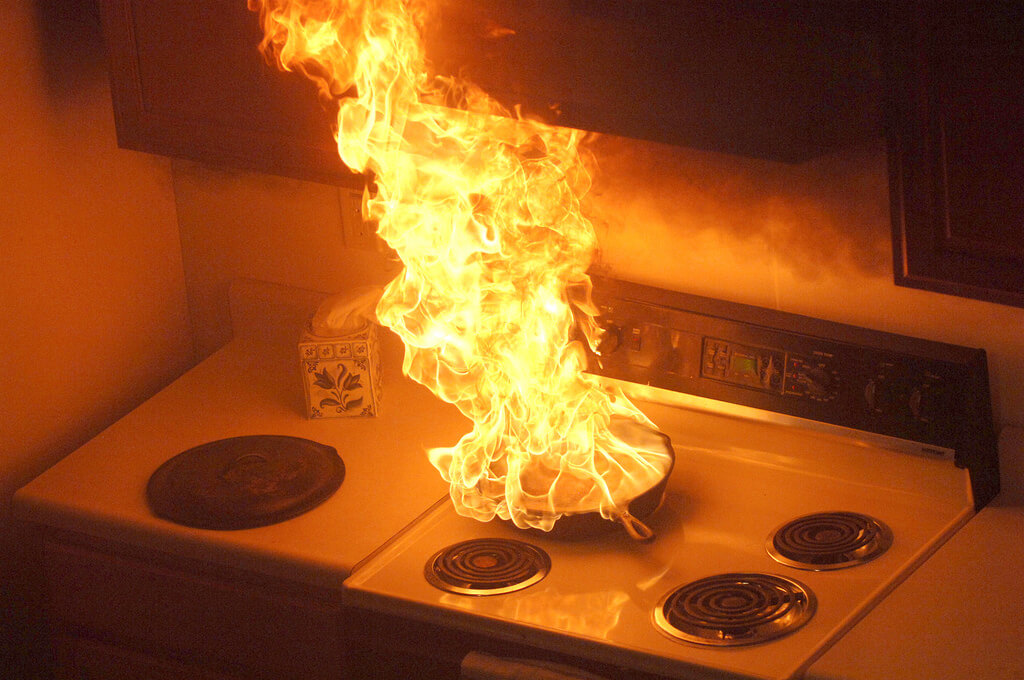
The kitchen is the room where the most residential fires start, where the most household burns occur, and where the most preventable accidents happen on a daily basis. None of this reflects carelessness so much as familiarity. The kitchen is a room people use so often and so automatically that the habits that compromise safety become invisible through repetition. The kitchen safety practices that prevent the most serious incidents are the same ones that require the least investment to implement. They are habits, not hardware.
The Most Critical Element of Kitchen Safety
Cooking is the leading cause of residential fires in the United States. Never leave the stovetop unattended while something is actively cooking. Unattended cooking is the single most consistent factor in residential kitchen fires, and the distance between a managed flame and an unmanageable one is often measured in minutes. Keeping combustible materials, like dish towels, paper towels, and oven mitts, clear of the stovetop removes the fuel source from the ignition zone. A grease fire in a pan is addressed with a lid, not with water; water violently accelerates a grease fire. Knowing the correct response before the situation arises is the safety preparation that prevents turning a manageable situation into a dangerous one.
Kitchen Safety Tips to Prevent Cuts and Burns
Sharp knives are safer than dull ones, a counterintuitive kitchen safety principle that most people reverse. A dull knife requires more force and is more likely to slip off the food surface onto fingers. Keeping knives sharp, using a stable non-slip cutting board, and cutting away from the body are the knife habits that prevent the most common cutting injuries. Burns are the most frequent kitchen safety incident. Dry oven mitts provide effective insulation; wet mitts conduct heat directly to the hand. Turning pot handles toward the side of the stove rather than over the front edge prevents pots from being knocked off, a burn hazard particularly significant in households with children. Lifting lids away from the body and venting microwave containers at the edge rather than directly over the opening prevents steam burns.
Spills, Slips, and Keeping Kids Safe in the Kitchen
Spills create slip hazards that remain underfoot long after they occur; addressing them immediately is the habit that most directly prevents kitchen falls. Non-slip mats in front of the sink and stove provide traction where standing water and spatter most commonly accumulate. Child kitchen safety requires planning: pot handle position, the preference for back burners during active cooking, and never leaving hot liquids within reach address the burn hazard that causes the most serious pediatric kitchen injuries. Cabinet locks on cleaning products and knife storage address the two other primary child safety hazards.
Frequently Asked Questions (FAQs)
What is the most important kitchen safety habit to develop?
Never leaving the stovetop unattended during active cooking; it addresses the leading cause of residential fires at the point where intervention is still possible. A pan starting to smoke or a grease condition developing toward ignition is manageable by someone present and paying attention.
How do I handle a grease fire safely?
Slide a lid over the pan to cut off the oxygen supply and turn off the burner if it’s safe to reach. Never pour water on a grease fire; it causes the oil to flash and the fire to explosively expand. A Class K fire extinguisher rated for cooking oils is the appropriate suppression tool; a standard ABC extinguisher covers other kitchen fire types.
At what age is it safe to involve children in kitchen activities?
Stirring, measuring, and assembly tasks that don’t require proximity to heat are appropriate for young children with adult supervision. Stovetop cooking with hands-on adult guidance is appropriate from around age ten, with independence increasing as skills develop. The kitchen principles to communicate early are burner awareness, the danger of hot liquids, and the habit of asking before touching anything on or near the stove.
What safety equipment should every home have?
A working smoke detector within ten feet of the kitchen and a fire extinguisher rated for Class K or ABC fires mounted near the kitchen exit rather than above the stove. Sharp, well-maintained knives and a stable non-slip cutting board are the kitchen tools that prevent the most common non-fire injuries.
Is a gas stovetop less safe than electric or induction from a kitchen safety perspective?
Each presents different considerations. Gas has an open flame and combustion byproduct risk requiring ventilation. Electric coil stovetops retain heat after the burner is off, creating a contact burn hazard. Induction is safest from a burn perspective; the surface itself doesn’t get hot. All three share the fundamental kitchen safety risks of unattended cooking, grease fires, and hot cookware contact.
Rhode Island Real Estate Inspection Services provides home inspections to customers in Rhode Island. Contact us to request our services.
The post Stay Safe While You Cook: Kitchen Safety Every Homeowner Should Practice appeared first on Rhode Island Real Estate Inspection Services, LLC.
